We don’t wake the body. We wake the heart.
Awaken
Your Humanity
— A life-awakening journey through elderly care and rural living in Japan —
Before anything else
Let me introduce myself.
Three minutes, from the field behind the farmhouse. It will tell you more about what this is than the rest of this page can.
Japanese Care Experience by Kuromame-san — 3 minutes. The video loads only when you press play.
A note, so there are no surprises: the English in this video is spoken by AI. In truth I can hardly speak English myself. But I use whatever technology it takes to talk with you, and in practice we have never had a problem understanding each other.
What this is
You will not be watching from behind a line.
Most study tours put you in a room, show you a slideshow, and walk you past the residents. This is not that.
You spend two hours a day in practical care lessons — transfers, bathing support, positioning, feeding, and the small acts of respect that Japanese caregivers build their work on. The rest of the day you live in the village: growing food, cooking it, and sitting with the elders who have been here for eighty years.
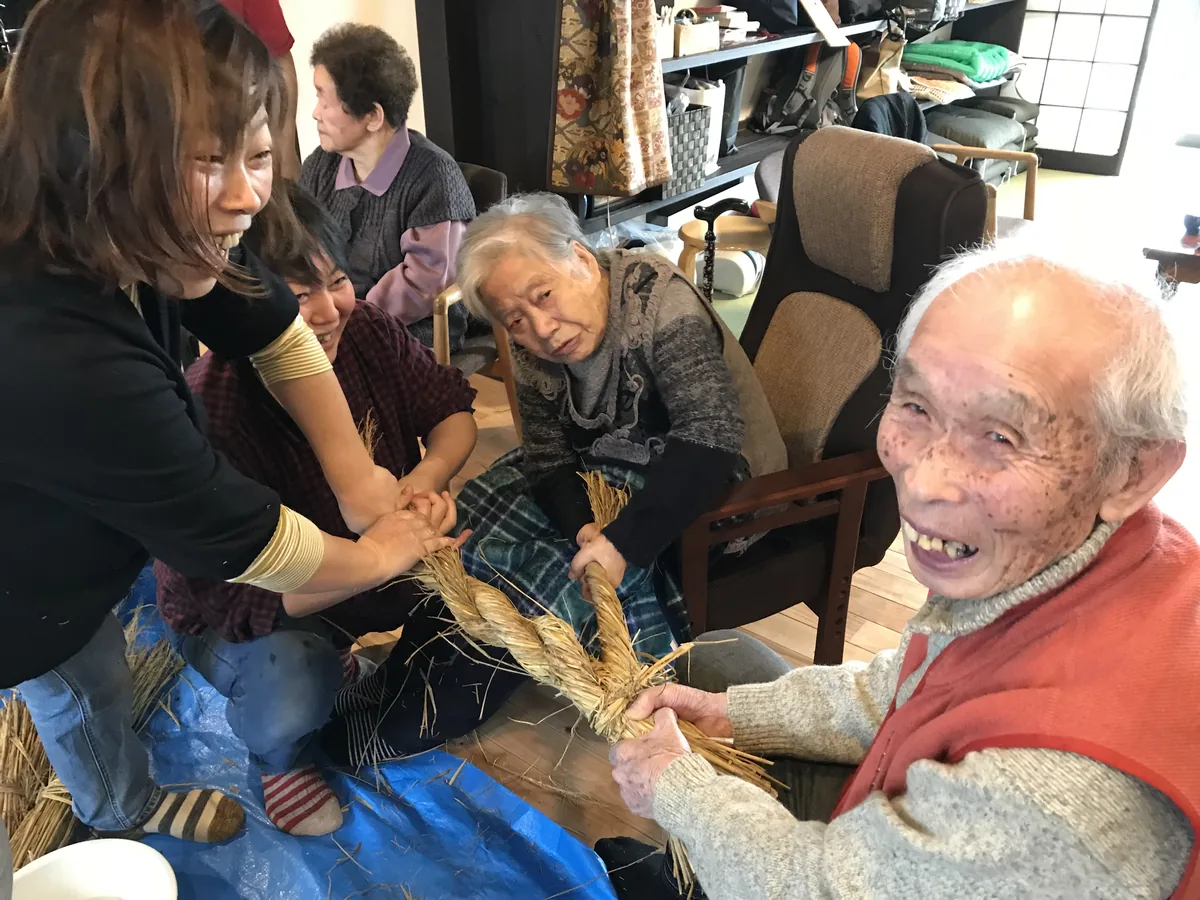
And then something turns around. You came to learn how to care for old people, and by the third day a woman of ninety is teaching you how to pickle vegetables, plant azuki beans, and cook rice over a wood fire. That reversal is the whole method. It is also the reason our residents got better.
People arrive as care workers, nurses, students, researchers. They leave having changed how they touch another person.
Japanese Elderly Care Experience
Four plans. Same care, different depth.
The programme is called the Japanese Elderly Care Experience, and it comes in four lengths. Every one includes the same daily foundation. What changes is how long you stay, and how deep you get.
| Plan | Short | Middle | Long | Super Long |
|---|---|---|---|---|
| Length | 2 days 1 night |
4 days 3 nights |
7 days 6 nights |
14 days 13 nights |
| Price | ¥50,000¥80,000 | ¥100,000¥160,000 | ¥175,000¥280,000 | ¥350,000¥560,000 |
| Care lessons | 2 hrs × 2 days | 2 hrs × 4 days | 2 hrs × 7 days | 2 hrs × 14 days |
| Ambassador certificate |
— | Yes | Yes | Yes |
| Best for | A first taste, alongside your own travel in Japan | Students and researchers who need real material | Working care, nursing and welfare professionals | Those who want to go all the way in |
Included in every plan
- Hands-on care lessons, two hours every day
- Two homemade meals a day from local ingredients — some of it cooked over the okudo-san, the wood-fired stove
- Pick-up and transport support from JR Shimoyama Station
- A traditional Japanese farmhouse to stay in — ours, next door to the care home, with Wi-Fi, futon, shower and air conditioning
- Photographs welcome. Share them anywhere you like
Not included: flights to Japan, domestic transport to the station, travel insurance, personal expenses.
The four plans in full
What each plan actually contains.
The table above is for comparing. This is for deciding.
More than sightseeing — two days to touch the heart of Japan
A trial plan. You glimpse Japanese life and caregiving in between your own sightseeing, stay in a traditional farmhouse, and see the kind of care that lifts a person’s spirit rather than just keeping them clean.
¥50,000 normally ¥80,000 Pilot price
Recommended for
- Anyone curious about Japanese caregiving culture
- Travellers who want one experience in Japan that is not sightseeing
What you do
- Rural life: chopping firewood, work in the field
- Cooking over the okudo-san, the wood-fired stove
- A first hands-on lesson in Japanese care technique
- Time with the elders who live here
What you take home
- An introduction to how care works in Japan
- The link between everyday life and caregiving
- A first feel for Japanese transfer and support technique
Four days that change the angle you look from
Our standard plan, and the most popular one. Long enough to stop being a visitor: you take on a role in the day, eat at the same table, and practise the technique often enough that your hands start to remember it. If you are not sure which to choose, choose this one.
¥100,000 normally ¥160,000 Pilot price
🎓 Ambassador certificate on completion
Recommended for
- Those who want to study Japanese caregiving as a culture, not a checklist
- Students, researchers and working care professionals
- Anyone who wants daily life and human contact rather than a tour
What you do
- Share the work with the elders — the field, the kitchen
- Eat at a Japanese table together, every day
- Time in the villages, the hills and the quiet
- Care technique practised daily until it sticks
What you take home
- Japanese care technique, studied in order and practised properly
- How caregiving sits inside ordinary life here rather than beside it
- How repetition protects the caregiver’s own body
- A wider view, from talking with locals and with participants from other countries
Master the technique, and change how you see a life
For those who want to go further. A week is long enough to blend into the daily rhythm here, and to work through Japanese care technique thoroughly rather than sampling it.
¥175,000 normally ¥280,000 Pilot price
🎓 Ambassador certificate on completion
Recommended for
- Working professionals in care, nursing or social welfare
- Researchers and educators studying Japanese caregiving in depth
What you do
- A week living inside the life of the village
- Days shared with the elders until the relationship is real
- How a care team is built, and how the place is actually run
- Japanese care technique, worked through thoroughly
What you take home
- Intensive practice in transfer care — standing, wheelchair, bed and bath
- A deep read on the values underneath Japanese care
- What it takes to hold a team and a building together
Two weeks to master care, master the life, and rethink your own
The long programme, for people who want all of it. Two weeks of learning, living and being with others here expands what you think care can be — and most people leave with something closer to a philosophy than a skill set.
¥350,000 normally ¥560,000 Pilot price
🎓 Ambassador certificate on completion
Recommended for
- Professionals in care, nursing or social welfare
- Researchers and educators wanting a systematic study
- Anyone who wants the daily life, the community and the caregiving as one thing
What you do
- A long stay in the traditional farmhouse, living as we live
- Roles shared with the elders in the field and the kitchen
- Daily practice from the basics through to the difficult parts
- Team care and how the facility is managed
- Time in the hills to get your own mind and body back
- Exchange with local residents and with participants from around the world
What you take home
- Transfer technique acquired systematically and practically
- A culture where care and daily life are not separate things
- How to protect your own body over a working lifetime
- Team care and community work, practised rather than described
- Your own position on what caregiving is for
Before you press pay
Write to us with your dates first. We take very few people at a time, so we need to confirm the dates are free before you send any money. If you pay for dates we cannot host, we refund you in full — but it is slower and more annoying for both of us than a two-line email.
If you have to cancel
- 60+ days before arrival — full refund, less payment processing fees
- 59–30 days — 50% refunded
- 29–15 days — 30% refunded
- 14 days or less — no refund
If we cancel, you are refunded in full. If a disaster or an epidemic keeps you out of Japan, we move your dates within a year at no charge.
Ask about changing the dates before asking for a refund. Shifts change, leave gets cancelled — we know. Where we have space we would far rather move you than take your money and give it back.
Full terms and our business details are on the payment and cancellation page. Payment is handled by Stripe; we never see your card details.
A day here
What the hours actually look like.
- 7:00
Wake in the farmhouse. Rice cooking. The mountains are still cold at this hour, even in summer.
- 8:00
Breakfast together, then out to the field — harvesting whatever is ready that week.
- 10:00
Care lesson, part one. Hands on. Transfers, positioning, how to move a body without fighting it.
- 12:00
Lunch, cooked from what you picked. You will be asked to help.
- 14:00
Time with the elders. Conversation, tea, games, sometimes just sitting. This is the part visitors remember years later.
- 16:00
Care lesson, part two. Bathing support, meal assistance, and the questions that came up during the day.
- 18:00
Dinner. Then the evening is yours — the village gets very quiet, and the sky gets very wide.
The schedule shifts with the season and with who is staying. Nothing here is rigid.
Certification
The Kuromame-san Ambassador Program
What it is
Complete the Middle plan or longer and you receive the Kuromame-san Style Ambassador Certificate — our recognition that you have learned this way of caring well enough to carry it home.
What it is for
Ambassadors take these techniques back to their own workplaces and countries. Several now teach them to their own teams. It is how a small village in the Kyoto hills ends up in a care home on the other side of the world.
What comes after
We stay in touch. Ambassadors join a private group chat where they share what they are trying at home and ask each other for advice — all of us working toward the same thing: a world where growing old is a happiness.
Where you sleep
A traditional Japanese farmhouse.
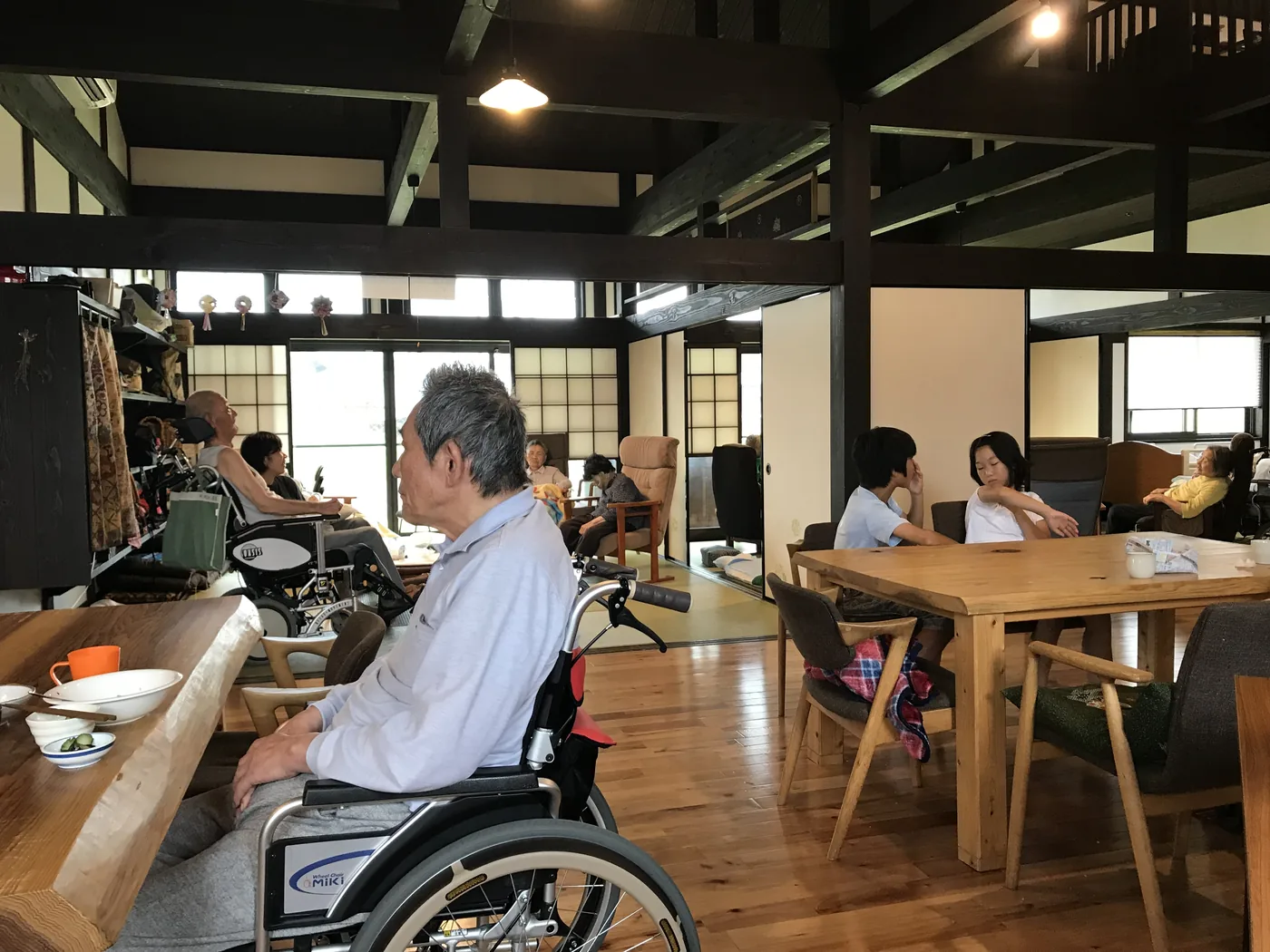
Not a hotel. A real kominka, ours, right next door to the care home — wooden beams, tatami, sliding paper doors, and a garden that the season decides. It is warm in the way old houses are warm: slowly, and from the middle of the room. It is also wheelchair-accessible, because the families who visit us need it to be.
You wake up to birds and to somebody already cooking. For many visitors, the house is what makes the care lessons land — you are not studying Japanese care from outside it, you are living inside the life it comes from.
About us
We look after people. That is the whole thing.
Kuromame-san is an elderly care provider in Kyotanba, Kyoto — in the hills, where the villages are small and getting smaller, and where most of the people we care for were born.
Ten years ago a woman came to us who had been bedridden at home. We did everything properly: bathing, toileting, meals, transport. Then she told us she would rather die than be looked after like this.
So we stopped, and started asking her questions instead. What was your life like? What are you good at? Teach us how to pickle vegetables. Teach us how to plant azuki beans. We want to cook rice over the wood fire and we have no idea how — help us.
Within months she was walking with a frame, and smiling, and helping us. She had not lost the ability to walk. She had lost anything worth walking toward.
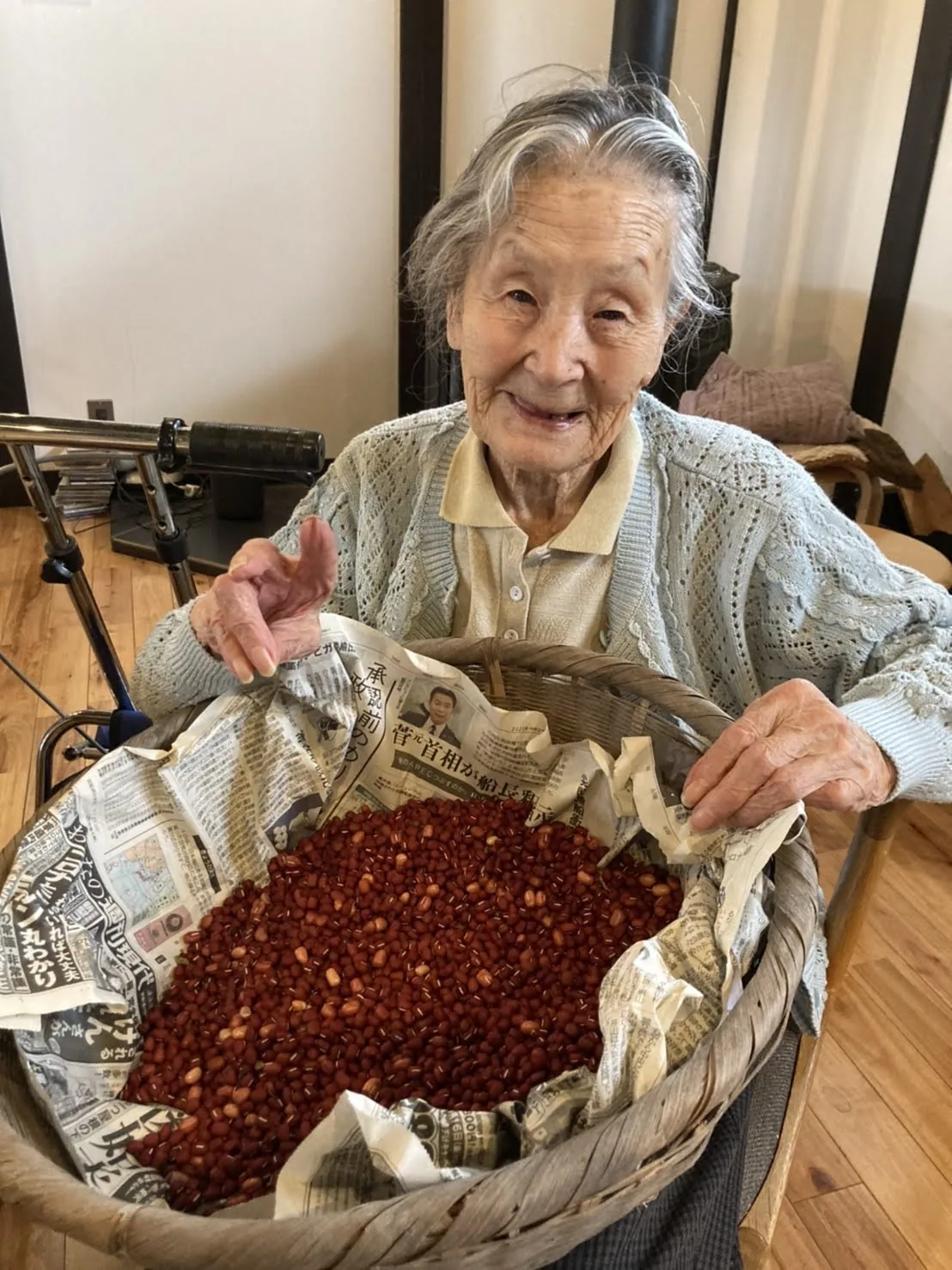
That is why we teach the way we teach. We gave up on care that only looks after people, and started recovering the old country way of living by being taught it, by the people we care for. Everything on this page comes out of that.
We are in Kyotanba, Kyoto Prefecture, in the Tanba highlands. The nearest station is JR Shimoyama on the Sanin Main Line, about 52km from Kyoto Station, and transfers are included in every plan. Most international visitors fly into Kansai (KIX) or Osaka Itami (ITM), continue to Kyoto, and take the Sanin Line from there.
Contact
Tell us when you can come.
Send us your preferred dates before making any payment. We confirm what is possible and answer your questions in English, usually within a few days.
Prefer email?
Write directly to kuromamesan20@gmail.com with your preferred dates and the details above.