We don’t wake the body. We wake the heart.
Give your parents
one more journey
through Japan.
— Care-supported travel in Japan for families with elderly parents —
Why the trip keeps getting postponed
You already know the reasons. So do we.
Your parents came to Japan once. They still talk about it. Now they need a hand with walking, bathing or medication — and every year the trip moves to next year. Families travelling with aging parents all write to us about a version of the same four worries.
“Can they handle the flight and all that walking?”
We build the days around what your parent can actually do — one or two stops, long rests in between, and a car waiting instead of a train platform. We pick you up at the station. Nobody is asked to walk further than they want to.
“Who helps them in the bath? In the toilet?”
A certified Japanese caregiver, the same person for the whole stay. Bathing, transfers, toileting, dressing, watching through the night if needed. This is our daily profession, not a service we added for tourists.
“Honestly, we cannot do 24 hours a day, for a week.”
You should not have to. There are hours in every day when we take over completely — so you can go see something, sleep, or sit somewhere quietly and be a traveller instead of a carer.
“And if something happens, in a country where we do not speak the language?”
We know the local clinics and hospitals, we make the call, and we interpret. We also ask for your parent’s conditions and medications in advance, so we are not learning them in an emergency.
What we provide
Care is the part we are actually good at.
A caregiver through the stay
A certified Japanese care worker supports your parent with bathing, moving, toileting and watching over them — day and, if arranged, night.
Wheelchair-friendly, and no stairs to fight
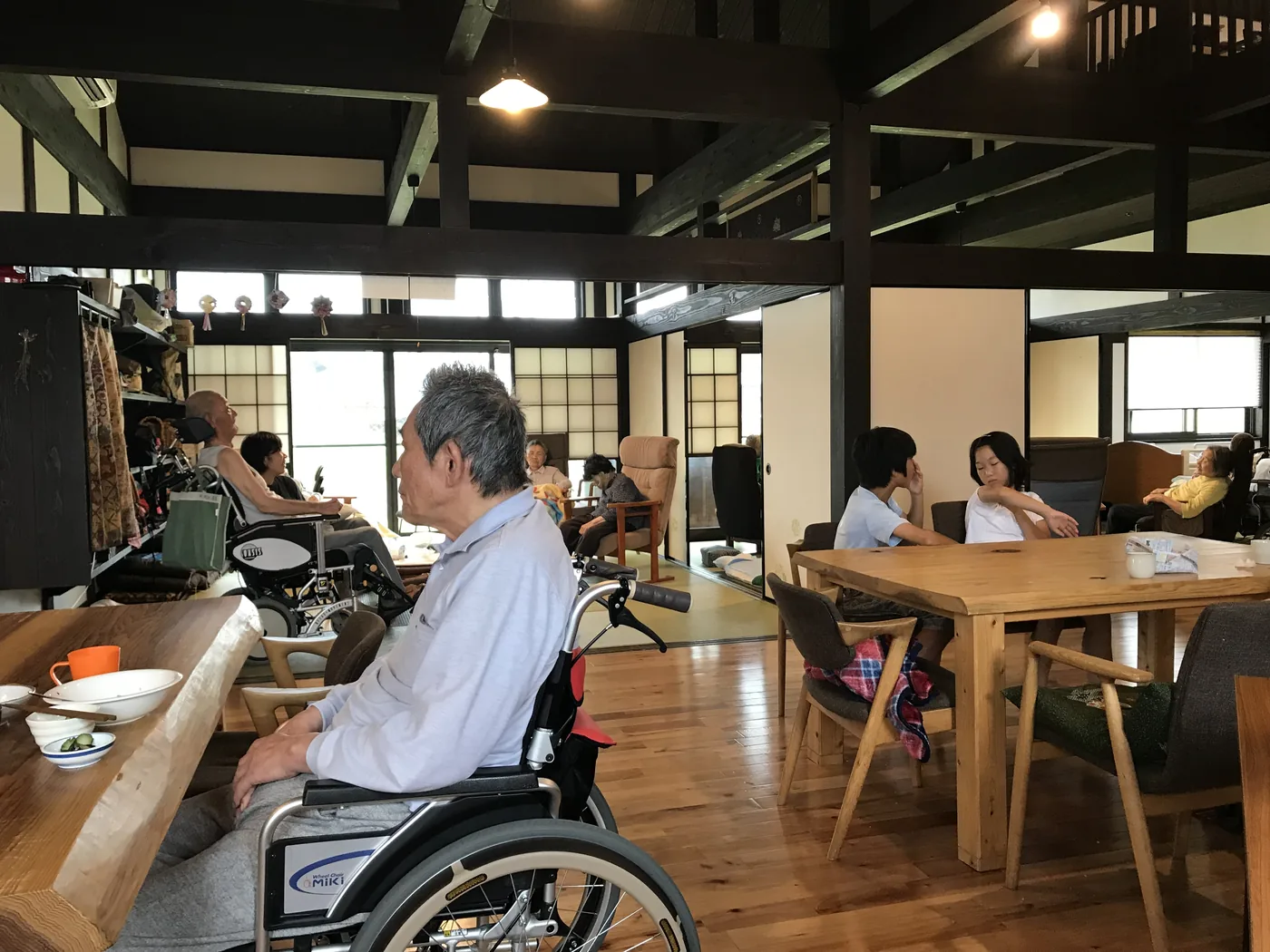
A traditional farmhouse arranged for a wheelchair and for someone who cannot move quickly. Ground floor, handrails where needed, and a futon or bed depending on what your parent sleeps better on.
Meals they can actually eat
Chopped, softened or thickened as required — and adjusted for salt, sugar or allergies. Local ingredients, cooked properly. Eating well is half of feeling well.
Medication kept on time
Send us the schedule in advance. We keep it, remind, and record. Jet lag is where medication routines fall apart, so we watch it closely in the first days.
Doors, not distances
Station pick-up, car to every destination, wheelchair loaded and unloaded by us. The trip is measured in what they get to see, not in how far they had to walk.
Hours off, for you
The part families do not ask for and need most. We take over; you go and enjoy Japan for a few hours. Come back when you want to.
Three ways to do it
Pick the shape, then we build the details together.
Every family is different, and the amount of support needed changes everything. So we start with a conversation and give you a written quote — nobody is asked to pay before we both know it will work.
A caregiver joins your own trip
You have already planned your days in Japan. We send a certified caregiver to travel with you for half a day or a full day — so the hard parts have somebody who knows how to handle them.
Half day or full day.
Quoted after we talk.
Three days in the farmhouse
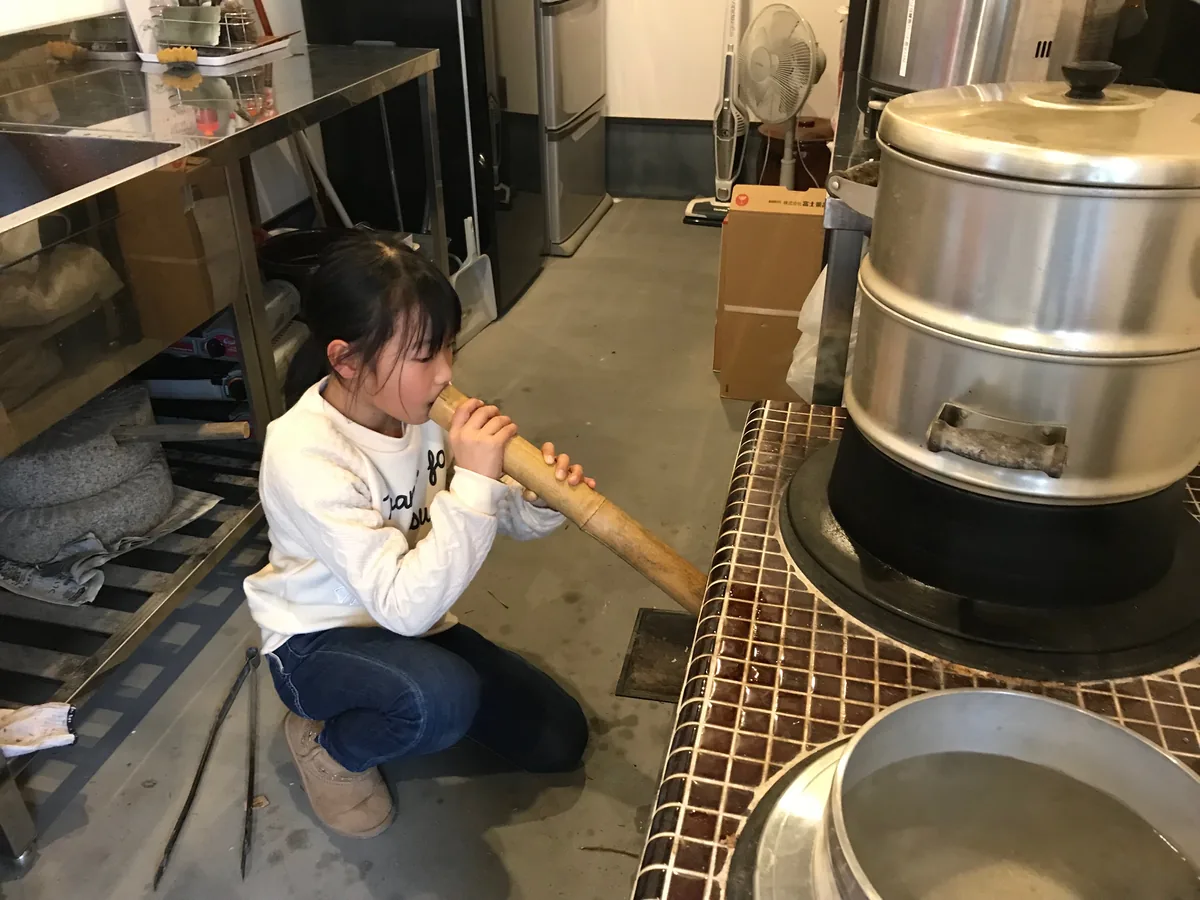
Stay in a wheelchair-accessible farmhouse right next door to us. Your parent rests, cooks, and sits in a real Japanese house. Learn to make a Japanese meal; watch rice cooked over the okudo-san, the wood-fired stove our own residents taught us to use. Care is provided throughout.
3 days, 2 nights.
Quoted after we talk.
A week, planned and accompanied
The farmhouse as your base for a week, at your parent’s pace. Village days of cooking and country life, and day trips in our own car with us alongside — around Kyotanba, and out to Amanohashidate on the coast. The version where you carry nothing.
7 days, 6 nights.
Quoted after we talk.
Days out
Kyoto is an hour away. We drive.
The farmhouse is in the countryside, but it is not far from the things your parents came to Japan for. We take you in our own car, choose what a wheelchair can actually get around, and go on the days your parent feels up to it.
Kyoto, without the crush
A little over an hour by car. We favour places like Sanjusangen-do, which is wheelchair accessible, and we go at the times of day and year when it tends to be calmer. Crowds are what ends a day early; we plan around them.
Amanohashidate and the coast
One of Japan’s three great views, out on the Sea of Japan side, with Maizuru and its harbour nearby. A long, easy drive with the stops your parent needs.
Cherry blossom and autumn leaves
You do not have to go to Kyoto for these. Kyotanba, Nantan and Kameoka all have their own spots — the same trees, a fraction of the people, and somewhere to park close by.
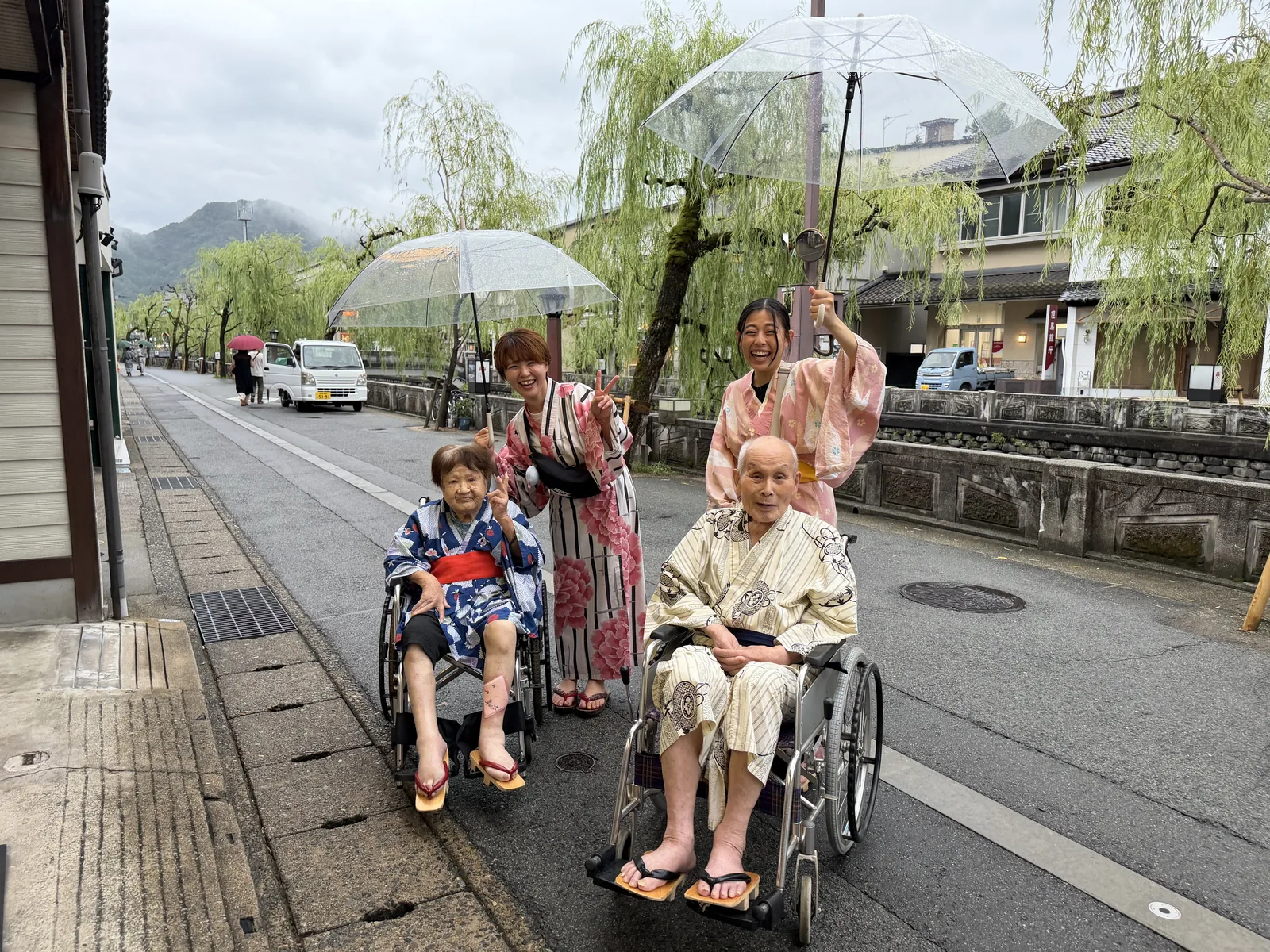
Nothing here is compulsory. Plenty of families spend the whole stay in the village and never once feel they missed something.
A day in the village
Slow on purpose.
- 7:30
Wake whenever they wake. Morning care, medication, and a Japanese breakfast in a room that smells of old wood.
- 10:00
Out, if they feel like it — a drive through Kyotanba, a shrine, a farm stand. One place, not five. We drive; car door to destination door.
- 12:00
Lunch — often cooked together, in the texture they can manage. Then a proper rest. This is not lost time; it is what makes tomorrow possible.
- 15:00
Tea with the elders here. Many of our residents are the same generation as your parent, and something happens in that room that no tour can arrange.
- 16:30
Bathing, with our caregiver. You are free for these hours — go out, or sleep. We mean it.
- 18:00
Dinner together. Then quiet. The village turns dark early, and most families find they sleep better here than anywhere else on the trip.
Please read this part
What we can and cannot do.
We would rather tell you now than disappoint you later. We are care professionals, not a medical facility.
We can support
- Walking difficulty, wheelchair users, and help with transfers
- Assistance with bathing, toileting, dressing and eating
- Reminding, timing and recording medication your parent already takes
- Adapted meal textures — chopped, soft, thickened
- Mild to moderate dementia, where the person is stable and can travel
We cannot provide
- Any medical procedure — injections, IV, tube feeding, suctioning, wound treatment, or administering medication as a medical act
- Care for someone whose condition is unstable or who has been advised against travel
- Emergency medical treatment. In an emergency we call and interpret; treatment is done by Japanese medical services
- Travel insurance. Please arrange insurance that covers your parent’s age and conditions before departure
If you are unsure which side of this line your parent falls on, write to us with the details. We will tell you honestly, and we will say no if no is the right answer.
Questions families ask
Before you write to us.
Can we travel in Japan with a wheelchair?
Can a parent with dementia travel to Japan?
Do you speak English?
How much does a care-supported trip to Japan cost?
What travel insurance do elderly parents need for Japan?
What if we have to cancel?
How far in advance should we book a trip to Japan?
About us
Why a care home is offering you a holiday.
Kuromame-san is an elderly care provider in Kyotanba, Kyoto — in the hills, where the villages are small and getting smaller. This is not a travel agency with a nurse on call. Looking after old people is what we do every day.
Ten years ago a woman came to us who had been bedridden at home. We did everything properly: bathing, toileting, meals, transport. Then she told us she would rather die than be looked after like this.
So we stopped, and started asking her questions instead. What was your life like? What are you good at? Teach us how to pickle vegetables. Within months she was walking with a frame, and smiling, and helping us. She had not lost the ability to walk. She had lost anything worth walking toward.
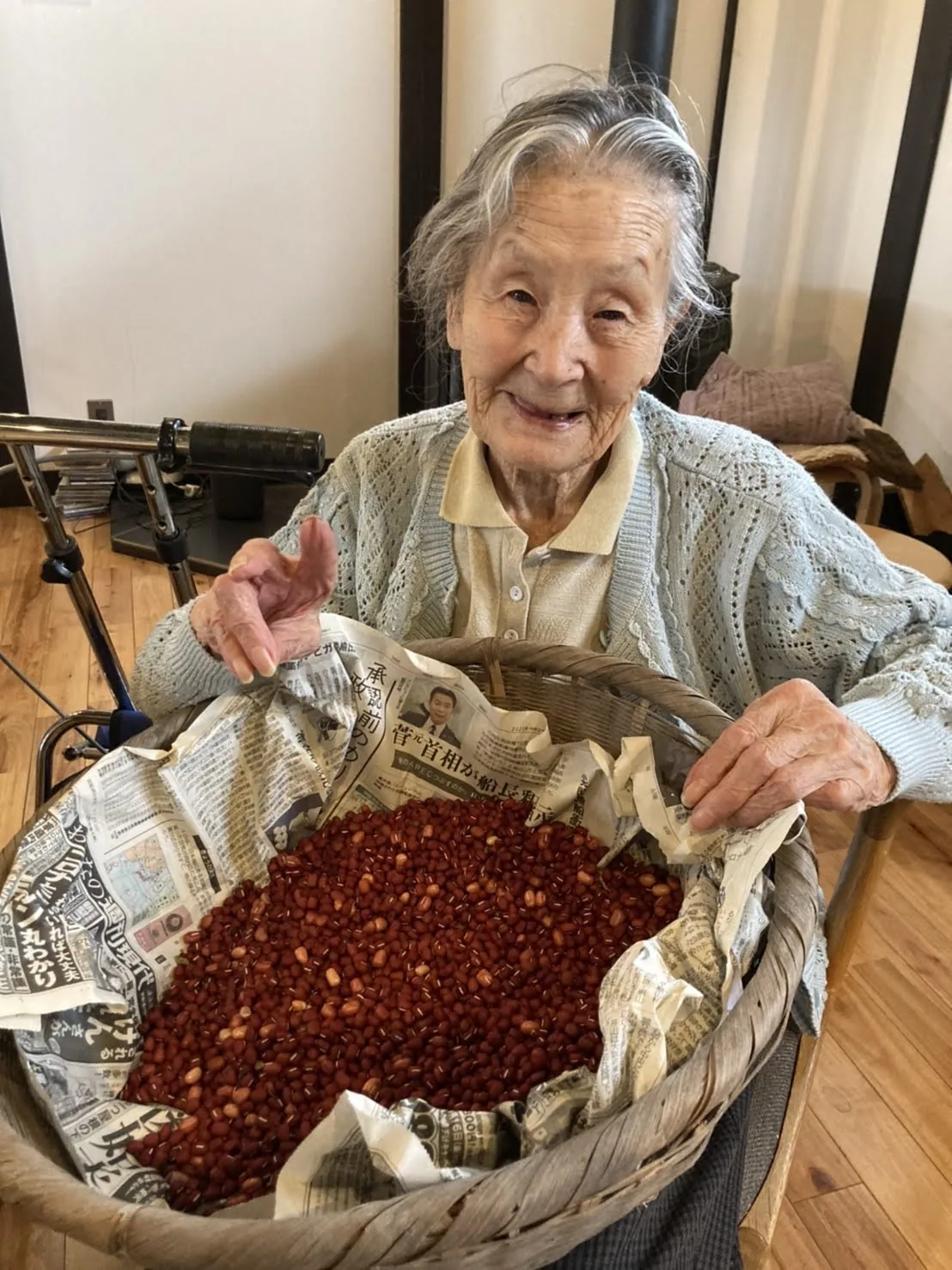
We now put that to work for visiting families. A senior-paced trip, wheelchair and all, with the care handled by people who do it for a living.
That is what we think a journey can be for your parent. Not being carried around Japan as a patient, but sitting in a kitchen with someone their own age, being useful, being asked what they think. The care is there so that the rest becomes possible.
We are in Kyotanba, Kyoto Prefecture, in the Tanba highlands. Most international visitors fly into Kansai (KIX) or Osaka Itami (ITM) and continue to Kyoto. We collect you from the station by car.
Tell us about your parent.
Their age, what they need help with, when you would like to come. We will answer honestly — including whether we are the right people for this.
Contact
Start the conversation.
We reply in English or Japanese, usually within a few days. Nothing is paid until we have both confirmed the details and you have a written quote.
Prefer email?
Write directly to kuromamesan20@gmail.com with the details above.